the most striking pattern across this week's dispatches is the parallel scheduling of drone shows at distinct scales and contexts. taste of chicago placed a roughly 15-minute drone-and-fireworks hybrid over grant park on friday night, anchored near buckingham fountain as part of the festival's 46th year. at the same time, the 47th annual lindquist family symphony pops concert coordinated a drone component alongside fireworks, and al qadsiah festival deployed 1,800 illuminated drones as a standalone production show. none of these events share a geography, a production partner, or an apparent connection, yet their simultaneous appearance in the same weekly window suggests drone shows have moved from novelty programming into standard outdoor-event infrastructure.
the distinction between the al qadsiah deployment and the north american events is worth noting for crews assessing scope. a 1,800-unit drone show represents a significant operational footprint in terms of pre-flight logistics, faa or equivalent regulatory coordination, and redundancy planning, though none of the dispatches provide technical detail on software, fleet management systems, or production partners for any of the three shows. the symphony pops and taste of chicago entries are similarly thin on specification, which is itself informative: at this point, drone shows are being announced in general-audience press without the technical framing that would have accompanied them even a few years ago.
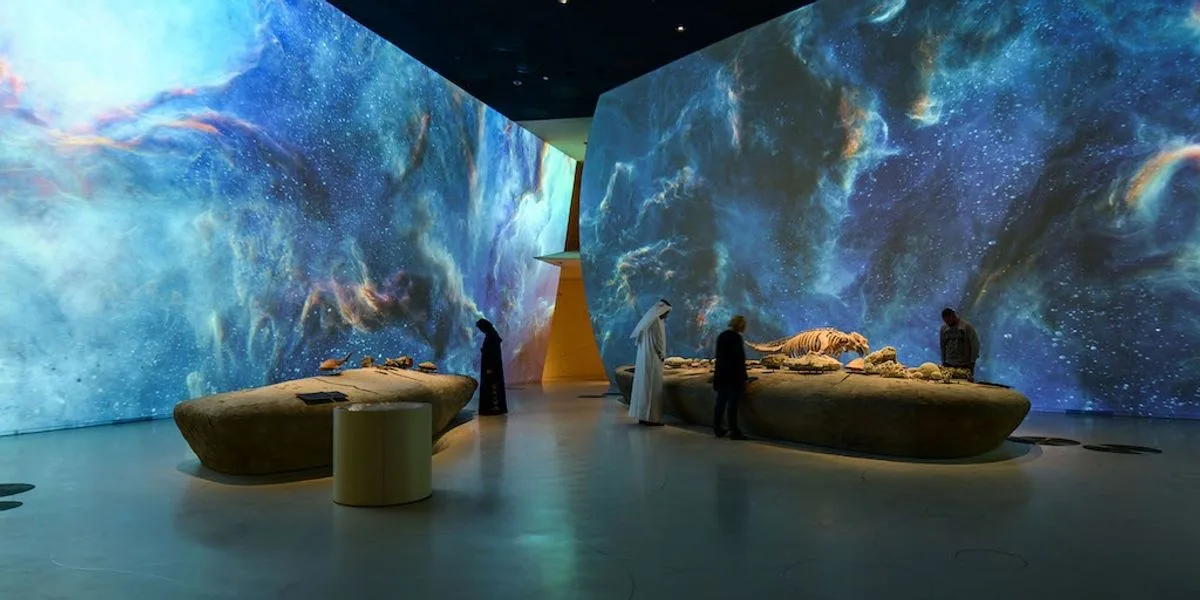
the indoor and permanent-installation side of the week is represented by two geographically remote but structurally different projects. the national museum of qatar installation, a collaboration between panasonic projector and display corporation and hive, uses wall-mounted projection systems to deliver cosmic-themed visuals as part of the museum's exhibit design. this is a different operational model from touring or live-event work: the system has to perform reliably across extended daily visitor hours without a crew reset between shows, which places different demands on projector selection and content management than a one-night deployment would.
on the touring side, russell dickerson's russellmania 2026 tour used glp jdc1 fixtures for arena-scale output, and jakov jozinović's ljubljana performances used robe moving lights. neither dispatch provides rig counts, operator credits, or media server details, but the fixture choices themselves are readable: the jdc1 is a hybrid strobe and wash unit built for large-format brightness, consistent with arena touring demands, while robe's appearance in a theatrical performance context in ljubljana reflects the brand's presence across both ends of the production scale. taken together, the two touring entries reinforce that fixture selection at this level tends toward proven catalog hardware rather than new releases.
for crews reading across the full week, the clearest takeaway is that drone show production is now volume business in the outdoor events sector, running simultaneously at a community symphony, a major civic food festival, and a regional cultural festival with no apparent coordination between them. the more technically demanding work — permanent av installation, arena touring lighting — remains less documented in public trade coverage but represents the bulk of crew hours and system integration complexity. the gap between what gets announced and what gets specified is widening, which makes cross-referencing dispatch patterns over time more useful than reading any single week in isolation.